
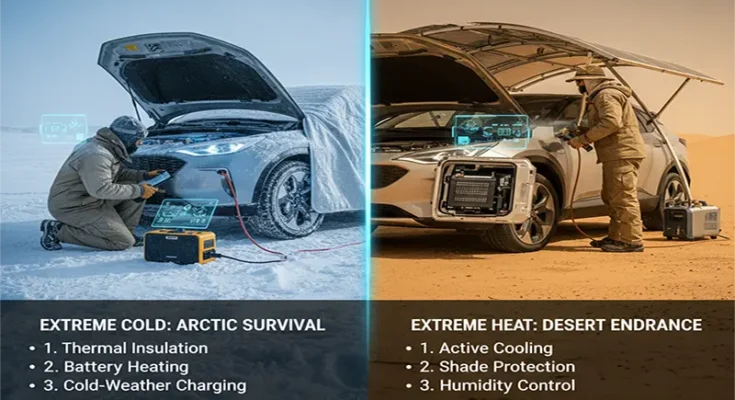
How to Extend Hybrid Car Battery Life in Extreme Climates: A 2026 Survival Guide

How to Extend Hybrid Car Battery Life in Extreme Climates: A 2026 Survival Guide

For hybrid vehicle owners in 2026, the high-voltage battery is no longer a “black box” mystery—it is a high-value asset that requires active management. While modern engineering has made these packs more resilient, the laws of electrochemistry remain unchanged: extreme temperatures are the single greatest threat to battery longevity. Whether you are navigating a $45^\circ\text{C}$ heatwave in Arizona or a $-25^\circ\text{C}$ winter in Calgary, your battery is fighting a constant battle against chemical degradation.

This guide provides a technical roadmap to maintaining the “Goldilocks Zone”—the $15\text{–}30^\circ\text{C}$ sweet spot where your battery operates with maximum efficiency and minimum wear.

Section 1: The Silent Killer—Extreme Heat

Heat is the primary cause of permanent, irreversible capacity loss. In 2026, as urban heat islands intensify, hybrid owners must understand two critical processes: electrolyte evaporation and thermal runaway.

In high-heat environments, the chemical reactions inside your battery (whether Nickel-Metal Hydride or Lithium-ion) accelerate. While …

How to Extend Hybrid Car Battery Life in Extreme Climates: A 2026 Survival Guide Read More
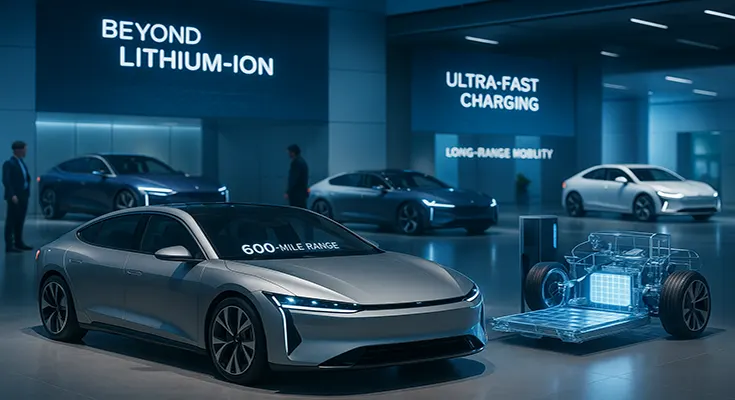
Beyond Lithium-Ion: The Upcoming Electric Cars with Solid-State Batteries and 600-Mile Range

Beyond Lithium-Ion: The Upcoming Electric Cars with Solid-State Batteries and 600-Mile Range

For the last decade, the electric vehicle (EV) industry has been running a marathon in lead boots. While we have seen incredible advances in software, motor efficiency, and aerodynamics, the core technology powering our vehicles—the lithium-ion battery—has remained fundamentally unchanged since Sony commercialized it in 1991.

Current EV owners live with a set of unspoken compromises. We accept that “fast charging” still takes 20 to 40 minutes. We accept that cold weather slashes our range by 30%. We accept that degradation is inevitable. But a technological shift is on the horizon that promises to erase these compromises entirely.

We are standing on the precipice of the Solid-State Battery (SSB) revolution. This isn’t just an incremental update; it is a generational leap in physics and chemistry that aims to deliver the “Holy Grail” of electric mobility: the 600-mile range EV that charges in 10 minutes.

If you are the type of …

Beyond Lithium-Ion: The Upcoming Electric Cars with Solid-State Batteries and 600-Mile Range Read More
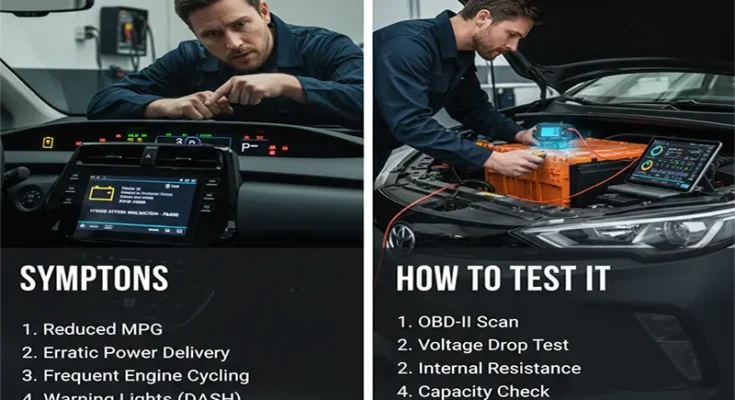
Symptoms of a Failing Hybrid Battery and How to Test It: A Comprehensive 2026 Guide

Symptoms of a Failing Hybrid Battery and How to Test It: A Comprehensive 2026 Guide

The high-voltage battery in a hybrid vehicle is the heart of its efficiency. Unlike a traditional lead-acid starter battery, which typically fails suddenly and leaves you stranded in your driveway, a hybrid “traction” battery usually dies a slow, lingering death. In the 2026 automotive landscape—where many early-generation hybrids are hitting high mileages and newer lithium-ion models are entering their second decade—recognizing the early warning signs of battery failure is essential for avoiding massive repair bills and maintaining your vehicle’s safety.

This guide outlines the subtle and critical red flags of a failing hybrid battery and provides a roadmap for testing its health using both DIY and professional methods.

Section 1: The Subtle Red Flags

Early symptoms of battery degradation are often overlooked because the car continues to drive. However, these “quiet” warnings are the best time to intervene before a total system shutdown.

  • The MPG Slide: If your hybrid, which
Symptoms of a Failing Hybrid Battery and How to Test It: A Comprehensive 2026 Guide Read More
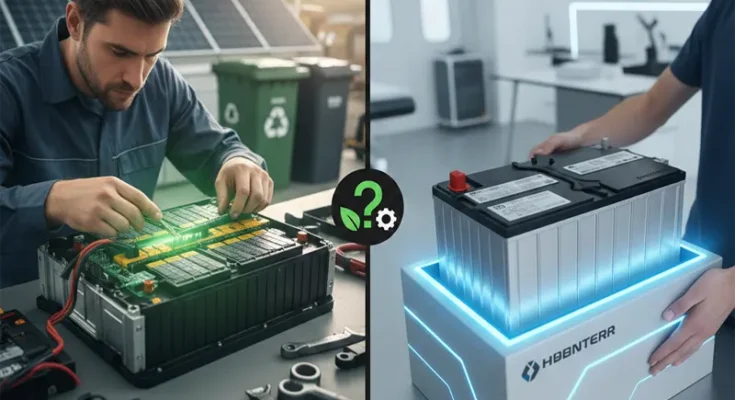
Hybrid Battery Reconditioning vs. Buying New: Is the "Green" Fix Really Worth It?

Hybrid Battery Reconditioning vs. Buying New: Is the “Green” Fix Really Worth It?

The silence of a hybrid car gliding through a parking lot is a symphony to its owner – until that dreaded moment the “Check Hybrid System” warning illuminates the dashboard, often accompanied by the “Triangle of Doom.” For owners of aging hybrid vehicles, particularly those with 150,000 miles or more, this often signals the inevitable: a failing high-voltage battery. Faced with a potentially crippling repair bill, a critical question arises: is hybrid battery reconditioning a smart, economical, and environmentally friendly choice, or is biting the bullet and buying a brand-new battery the only path to long-term peace of mind?

What is Reconditioning, Really?

Battery reconditioning is often misunderstood, conflated with simpler, less effective “repairs.” True reconditioning is a sophisticated, multi-step process performed by specialized shops, not a DIY project. It involves removing the entire battery pack from the vehicle, disassembling it into individual modules (cells), and then rigorously testing each …

Hybrid Battery Reconditioning vs. Buying New: Is the “Green” Fix Really Worth It? Read More
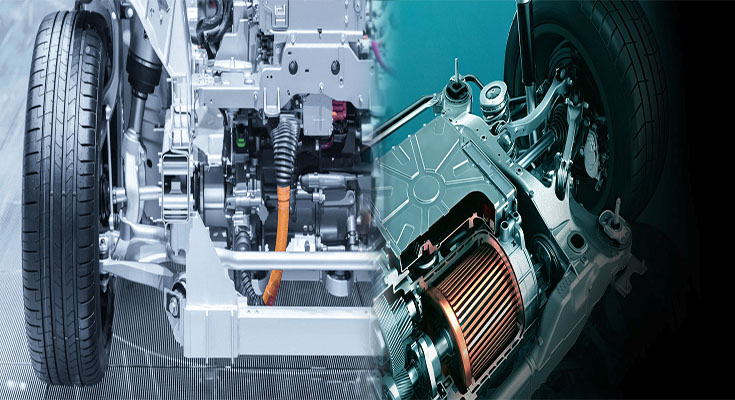
Efficiency Gains with Advanced Regenerative Braking in EV Battery Systems

Efficiency Gains with Advanced Regenerative Braking in EV Battery Systems

As electric vehicles (EVs) continue to gain momentum, technological advancements are constantly improving their efficiency and performance. One area where significant gains are being made is in regenerative braking systems. By harnessing the kinetic energy generated during braking and seamlessly converting it back into electrical energy, these advanced systems are revolutionizing the efficiency of EV battery systems. In this article, we will explore the efficiency gains associated with advanced regenerative braking in EV battery systems.

Regenerative braking is a technology that allows EVs to recover and reuse energy that would otherwise be lost as heat during traditional friction-based braking. When a driver applies the brakes, the electric motor in the vehicle switches into a generator mode, converting the kinetic energy of the moving vehicle back into electrical energy. This energy is then stored in the vehicle’s battery for later use, reducing the overall need for frequent recharging.

The integration of …

Efficiency Gains with Advanced Regenerative Braking in EV Battery Systems Read More