

Dual Carbon Battery Charges 20x Quicker Than Lithium
 The Ryden dual carbon battery, created by Energy Japan Plus, is a new, a lot more sustainable, safer, longer-lasting and expense-effective battery technology. If Dual carbon proves to be a far more economical and much more advantageous battery more than lithium ion, they nevertheless will need the battery manufacturer like Panasonic to develop and that’s what the licensing agreement comes in. I hope this is a successful project and should be excellent for the EV business. The dual carbon new battery is cheaper, safer, and 100% recyclable, creating it an desirable alternative that could bring high-efficiency electric vehicles to marketplace additional promptly.
It also talks about worldwide dual carbon battery market place analysis and demand forecasts to 2020, which is further segmented in to variety and by geography, which would be valuable to service providers, operators and investment firms these who are searching to invest in this sector. Japanese business, …
Dual Carbon Battery Charges 20x Quicker Than Lithium Read More The Japanese company called Power Japan Plus has created a new dual carbon battery with which it hopes to revolutionize the electric automobile, as effectively as other factors. There are no revolutions and black swans, but the progress of battery tech follows much more like a Moore’s Law, where the price overall performance improves exponentially and predictably. It really is clear Musk and Tesla are seeking nicely ahead into the future, and they won’t be caught by surprise when a battery breakthrough inevitably occurs. The Ryden battery eliminates the unstable active material utilized in other higher functionality batteries, significantly reducing fire and explosion hazard.
 GM Has Aggressive Plans for Self-Driving Vehicles – By the end of subsequent year GM plans to have a fleet of self-driving Chevy Volts driving about the campus of its Detroit technical center. Elon is not worried about the Al-air battery since he currently has a greater technologies in the operates called the dual carbon battery. Sustainable – contains no rare metals, uncommon earth metals or heavy metals, and is one hundred percent recyclable, vastly improving the cradle-to-cradle sustainability of an advanced battery. The initial batteries developed are slated to be used in satellites and medical devices, and will expand operations when the technology is licensed out for use in electric cars. Thermal stability indicates that this battery will not heat up while in use or for the duration of charging, and removes the threat of thermal explosion and producing for a safer battery.
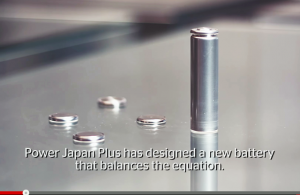
 Power Japan Plus has announced an innovative new battery that charges up to twenty times faster and lasts longer than high-finish lithium ion batteries. Never worry that you will wear out the battery with these speedy charges either, as PJP claims its technologies can take at least 3000 discharge cycles just before starting to degrade. I’m confident that Tesla can develop production lines and testing facilities for any type of promising new battery ideas. Sooner or later, Energy Japan Plus hopes to expand this technologies and produce other batteries whose only active ingredient is organic carbon sourced from organically grown cotton. It’s intriguing to see where this new battery technology will lead development of battery powered points.
 Japanese begin-up Power Japan Plus has launched a new battery technology that claims to supply a a lot more sustainable, safer, longer-lasting and expense-powerful battery technology with an power density comparable to a lithium ion battery. Power Japan Plus announced what it calls the Ryden, or Dual Carbon, battery, with carbon anode and cathode that makes it possible for for charging at 20 times the rate of current lithium ion batteries. Energy Japan Plus is developing the dual carbon battery in partnership with Kyushu University in Fukuoka, Japan. Due to the fact that battery has a capacity of 24 kWh, a back-of-the-envelope extrapolation would give a charging time of 42 minutes for the 85 kWh battery of a prime of the line car.