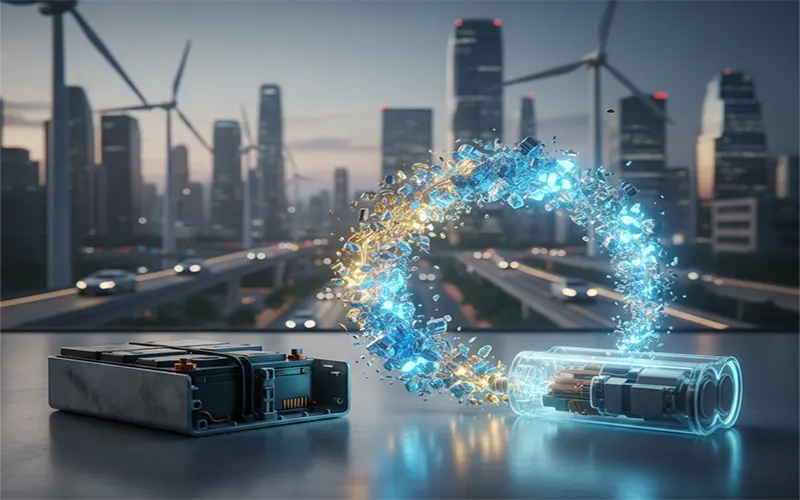
By 2026, the hybrid vehicle landscape has matured significantly. Millions of early-generation hybrids are reaching their end-of-life stage, transforming what was once a waste disposal problem into a massive economic opportunity. Today, hybrid batteries are no longer seen as toxic trash but as “urban mines” rich in lithium, cobalt, and nickel.
If you are an owner looking to dispose of an old battery, the good news is that 2026 legislation and market demand have made recycling not just easy, but potentially profitable. This guide explores the modern “Take-Back” ecosystem and the financial incentives available to you.
The 2026 Legal Landscape: Extended Producer Responsibility
In 2026, throwing a hybrid battery in a standard landfill is illegal in nearly every U.S. state. Under new Extended Producer Responsibility (EPR) laws—pioneered by states like New Jersey and California—manufacturers are now legally responsible for the “cradle-to-grave” management of their batteries.
These laws mandate that battery producers create accessible management plans, ensuring that every high-voltage pack sold can be tracked and recycled. For consumers, this means the infrastructure for disposal is now baked into the automotive service network.
Section 1: Manufacturer “Take-Back” & Exchange Programs
The most common way to recycle your battery in 2026 is through the original equipment manufacturer (OEM). Most brands now operate “closed-loop” systems where they recover old minerals to build new batteries.
- Toyota’s Core Credit: Toyota remains a leader in battery recovery. In 2026, Toyota typically offers a “Core Credit” of roughly $100 to $200 for a returned battery. More importantly, if you are buying a replacement, they often provide an exchange discount of up to $1,000 off the new pack when you trade in your old one.
- Ford & Redwood Materials: Ford has fully integrated its supply chain with Redwood Materials. Owners can drop off batteries at certified Ford dealerships, where they are shipped to specialized “hydrometallurgy” facilities to recover 95% of the metals.
- The Tesla & Honda Ecosystem: Both manufacturers now utilize third-party recyclers like Li-Cycle to process end-of-life packs, often providing loyalty incentives for owners who stay within the brand’s ecosystem for their next vehicle purchase.
Section 2: Independent Recyclers and “Urban Mining”
If you are DIY-ing your battery replacement or your car is no longer supported by the manufacturer, independent specialized recyclers are your best bet.
| Recycler Name | 2026 Focus | Regional Presence |
| Redwood Materials | Full mineral recovery | Nationwide / Nevada Hub |
| Li-Cycle | “Spoke and Hub” shredding | East Coast & Midwest |
| Cirba Solutions | Multi-chemistry processing | Mid-Atlantic |
| ABTC | High-purity lithium extraction | Western U.S. |
These companies don’t just “dispose” of batteries; they use chemical processes to extract battery-grade minerals that are sold back to gigafactories. Many independent recyclers will pay for high-capacity packs, though the “rebate” to an individual consumer is often lower than the manufacturer’s core exchange.
Section 3: State and Local Rebate Programs
In 2026, the financial incentive for recycling isn’t just a private matter—it’s often backed by state and federal tax dollars.
- California’s Zero-Emission Assurance Project (ZAP): This program provides low-to-moderate-income residents with rebates of up to $7,500 for battery replacements not covered by warranty, provided the old unit is surrendered for recycling.
- Pennsylvania and New Jersey: Under the Battery Management Acts of 2024–2025, these states have implemented consumer-facing incentives that allow for tax credits or point-of-sale discounts when a battery is processed through a state-certified recycler.
- Federal Updates (Inflation Reduction Act): As of 2026, new rules under the IRA allow manufacturers to claim significant tax credits for using “Recycled Domestic Content.” This indirectly benefits you, the consumer, because it makes your old battery a valuable commodity that dealers are eager to take off your hands for a discount.
Section 4: The “Core Charge” System Explained
If you look at your invoice for a new hybrid battery, you might see a “Core Charge” (often between $500 and $1,350). This is essentially a deposit. You pay it upfront, and you only get that money back once you return your old battery. This is the single most effective “rebate” program in the country, ensuring that almost 99% of hybrid batteries are returned to the recycling stream rather than left in garages or landfills.
The Triple Win
Recycling your hybrid battery in 2026 is a triple win:
- Financial: You recover your core deposit and may qualify for state purchase grants.
- Environmental: You prevent toxic leakage and fire hazards.
- National Security: You contribute to a domestic supply chain of minerals, reducing reliance on foreign mining.
Safety Warning: Never attempt to transport a damaged, “puffed,” or leaking hybrid battery in a personal vehicle. In 2026, most local recyclers offer specialized, fire-resistant containers for safe transport. Contact your local fire department or a certified dealer for a “Damaged, Defective, or Recalled” (DDR) shipping kit if your battery is compromised.